

Generative Artificial Intelligence (GenA.I.) in Teaching and Learning

Academic Integrity Toolkit

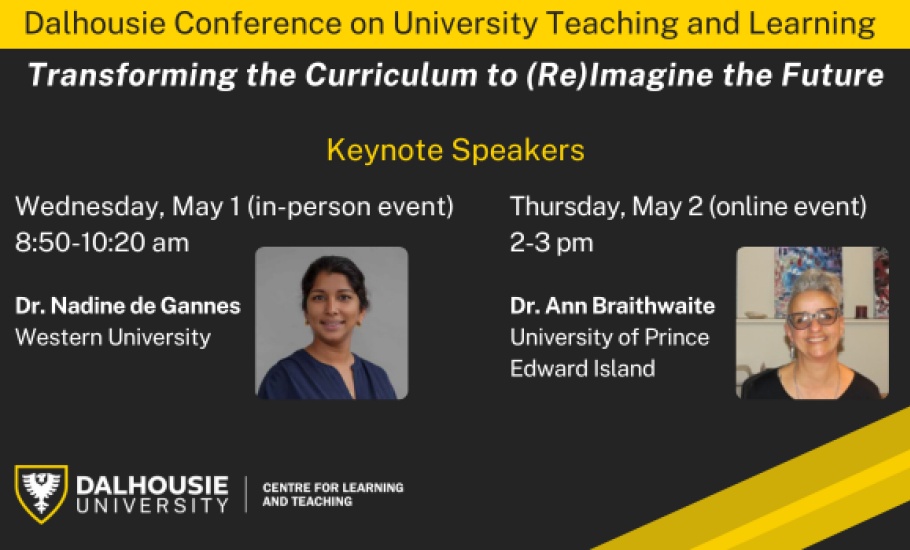


Upcoming Events
April 24, 2024
2:00 PM
- 3:00 PM A.I. in Creative Writing Class (GenA.I. CoP)
April 26, 2024
10:00 AM
- 12:00 PM Doing SoTL – Part 2: Designing Your Study
May 7, 2024
May 22, 2024
2:00 PM
- 3:00 PM A.I. and Privacy (GenA.I. CoP)
May 24, 2024
10:00 AM
- 11:30 AM Engaging in Ethical SoTL
Course Design Consultations
The CLT Team is here to support you as you design or revise your course. We can collaborate with you on outcomes, alignment, assessment, accessibility, and effective teaching strategies, as well as pedagogical uses of Dalhousie-supported instructional tools and technologies.
If you would like to schedule a consultation with a CLT educational developer, please email clt@dal.ca.
If your course is taught online or with online components, an education developer from the Online Pedagogy team would be happy to help and can be contacted through email onlinepedagogy@dal.ca. You can also review any of the related online teaching supports: